The Dubai issue
Booking Dubai Around Untold Without the Guesswork
The festival has moved out to the Jebel Ali side of the city. Book your hotel and your transport around that, and think about how your nights will end.
By Saskia van DijkDubai's neighbourhoods, sights and slow mornings
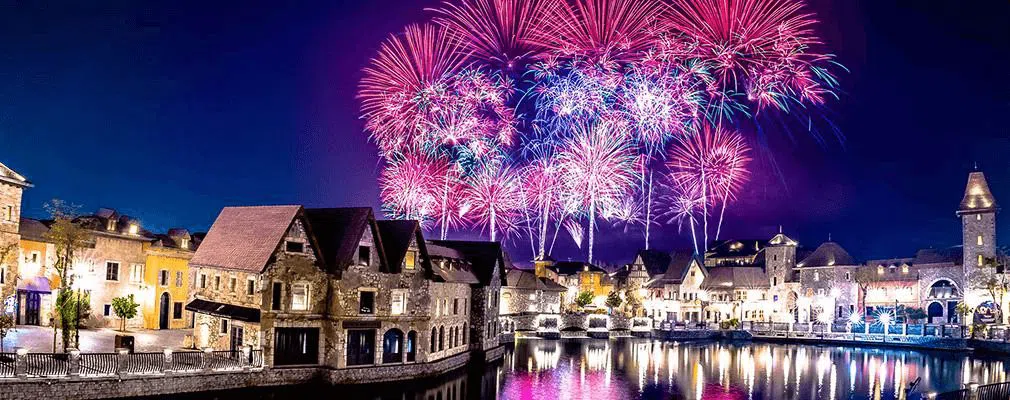
The drive out to Jebel Ali runs past container cranes and a long stretch of graded sand, and then the road opens onto a floodlit complex that looks like a small city assembled in a hurry. That is where UNTOLD sets up in November, roughly forty minutes from the Downtown hotels most visitors book by reflex. Get that single piece of geography right and the rest of the trip more or less arranges itself.
The dates, and the address that changed
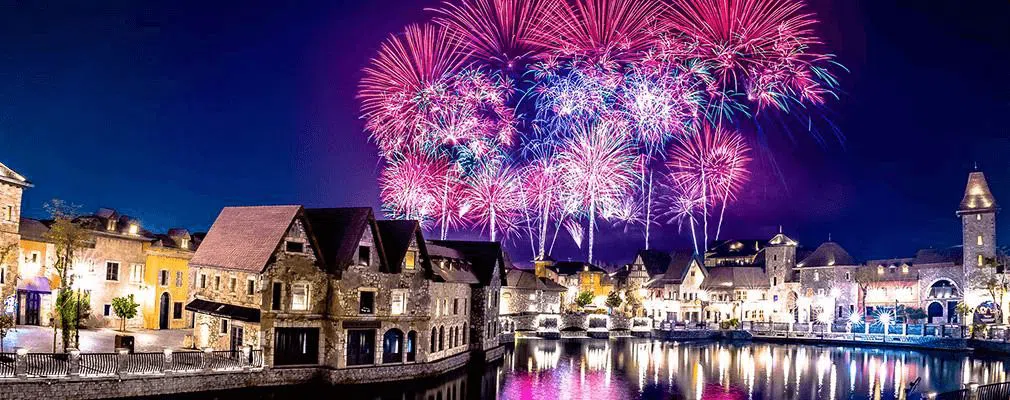
UNTOLD Dubai (Dubai Parks and Resorts) runs 5 to 8 November 2026, four days and four nights. What should shape every other booking is the postcode rather than the lineup: the festival has moved from Expo City to Dubai Parks and Resorts, at the far south-western end of the city. People who booked beds in Downtown for a previous edition and assumed nothing changed are the ones who will spend a fortune on taxis.
Passes are sold individually with no group minimum, which matters more than it sounds. A four-day general admission pass starts around AED 350 on early bird and settles near AED 590 at standard price; VIP for four days starts around AED 900. There is no requirement to buy in blocks of four or six, so a group that assembles from three different countries can each buy their own and sort it out later.
VIP buys you raised viewing decks and separate bars. Whether that is worth roughly AED 300 more depends entirely on how you handle queues and crowds. You are paying for a better place to stand still and drink without waiting twenty minutes, not for a better view of the stage. If you are the kind of person who spends the set in the middle of the crowd, save the money.
The site itself is large, which is the practical argument for going with people you do not need to keep in eyeshot. Friends can split across stages and regroup at a fixed landmark without anyone panicking. Agree the meeting point before you go in, because phone reception on a site of that size in the middle of a set is unreliable everywhere in the world and Dubai is no exception.
One small piece of context explains why the move works. Dubai Parks and Resorts opened in 2016 as the region's largest theme-park complex, built to absorb enormous daytime crowds arriving by car and coach. The road network, the car parks and the marshalling space were all sized for that. A festival slots into infrastructure that already exists rather than improvising it on a patch of desert.
Plan your Dubai trip
Live prices from our booking partners.
Free cancellation on many rooms. We may earn a commission when you book.
Sleep on the right side of the city
Rove at the Park (Dubai Parks and Resorts) is the only hotel physically inside the complex that is confirmed open and bookable for the dates, at roughly AED 300 to 500 a night. It is plain, functional and entirely without pretension, with twin rooms, a decent breakfast and no fuss, and its single overwhelming advantage is that you can walk back to your bed at 3am instead of negotiating a surge-priced taxi with a driver who does not want the fare. Do not assume the neighbouring Lapita resort is an option; it is in a refurbishment window.


Premier Inn Dubai Investments Park (Dubai Investments Park) is the value base, at roughly AED 250 to 400 a night. It has 304 rooms, so it will not blink at eight people checking in together, and it has cheap twins and a licensed bar on site, which is useful in a part of town where the licensed options thin out fast. It sits 500 metres from Dubai Investments Park metro station, which makes it the easiest place to reach on the way in from the airport and the easiest to leave from on the way out.
If your instinct is to book the beach and commute, price the commute honestly first: a taxi from Dubai Marina to the festival site runs around AED 60 each way, and from Downtown around AED 100. Over four nights, at the hour when everyone else is leaving at once, that adds up to more than the difference between a Jebel Ali room and a beachfront one. For a wider spread of options across the city, a Dubai hotel search will show you what the trade-off actually costs in your dates.
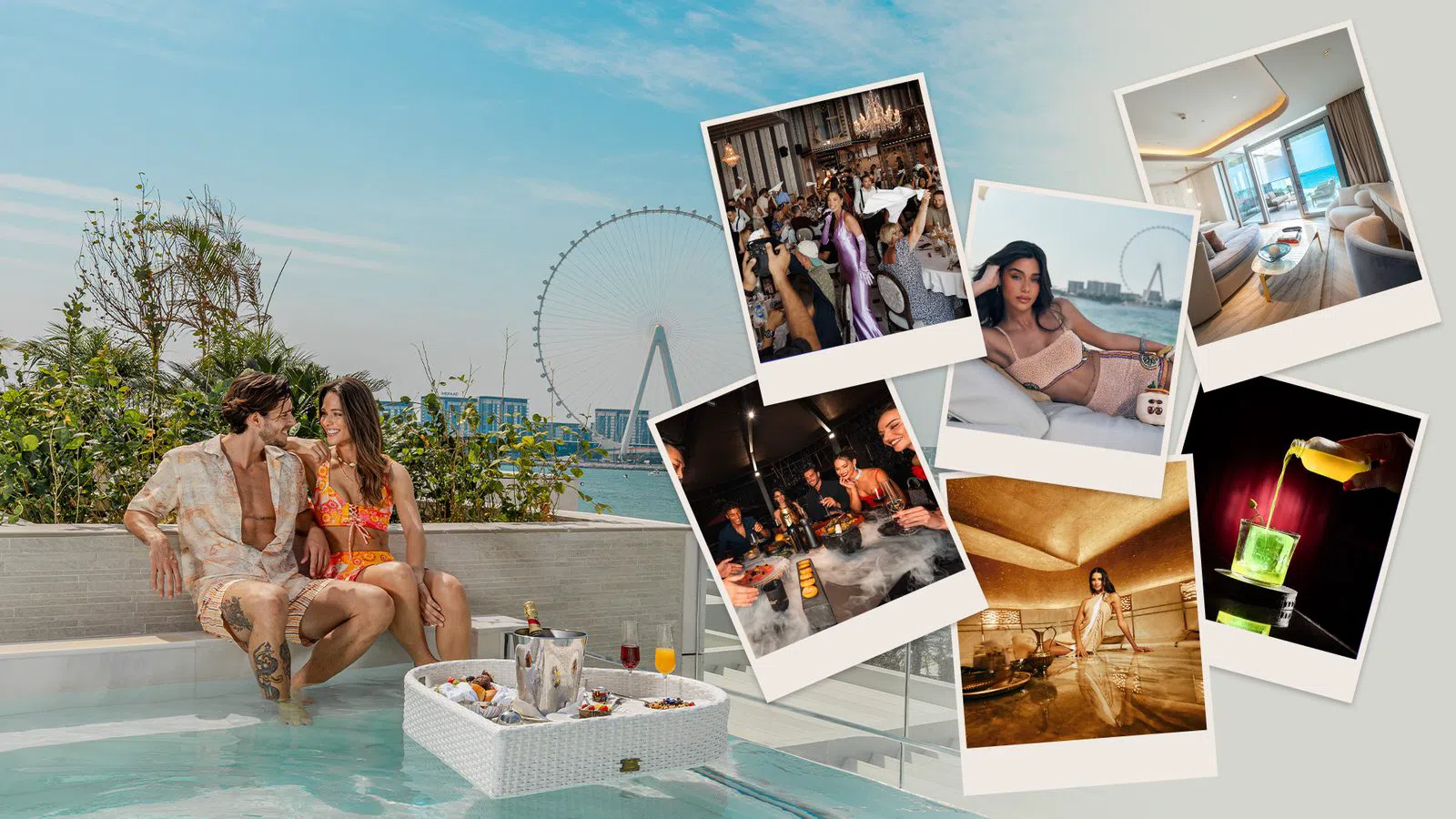
FIVE LUXE JBR (Jumeirah Beach Residence) is the exception that justifies the commute, at roughly AED 900 to 2,000 a night. It is a hotel built explicitly around not stopping: suites with DJ booths and dancefloors, and Playa Pacha running the pool all day. It is geared to groups, the door is friendlier to guests than to walk-ins, and it is a genuinely bad idea for anyone who wants to sleep before noon. Book it knowingly or stay somewhere else.
The metro will get you close, and it will not bring you home
RTA Dubai Metro Red Line and the Ibn Battuta shuttle is the piece of the puzzle most people work out too late. The festival site has no metro station of its own. The route is the Red Line to Ibn Battuta, then the DPR1 shuttle from the adjoining bus station, which takes groups as they turn up with no booking and no limit. Buy a nol card each on arrival (AED 25, then fares of AED 3 to 8) and stop thinking about it.
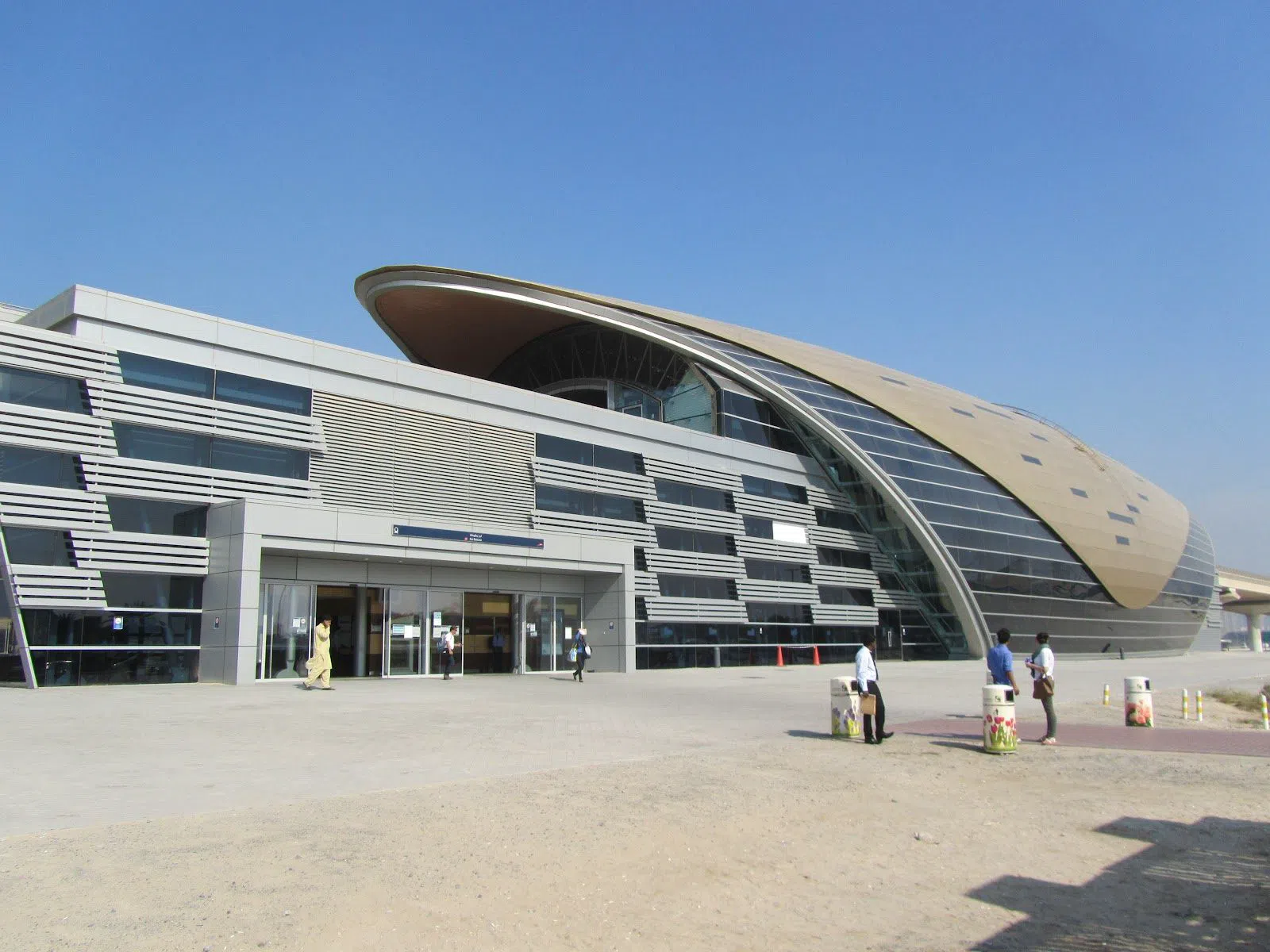
The catch is the return leg. The metro shuts long before a festival night ends, so the outbound journey and the inbound journey are not the same problem. Budget for taxis home: around AED 60 to Dubai Marina, AED 100 to Downtown, AED 120 to the airport. If you are staying inside the complex or at Dubai Investments Park, this problem largely evaporates, which is the whole argument for the Jebel Ali side.
The Red Line opened on 9 September 2009 and was, at the time, the longest driverless network in the world. Ibn Battuta station takes its name from the fourteenth-century traveller who spent close to thirty years on the road and wrote it all down, a reasonable patron saint for anyone flying halfway across a continent for four nights of music.
Eat properly before the gates open
Riverland Dubai (Dubai Parks and Resorts) is the free-entry dining strip at the gates of the festival site, and it is the sane place to eat. More than 50 outlets, no ticket, no reservation needed for most of them, mains roughly AED 60 to 150. A group of ten can walk in and find a table somewhere; if you want everyone sitting down together at one of the proper restaurants, book that one ahead.
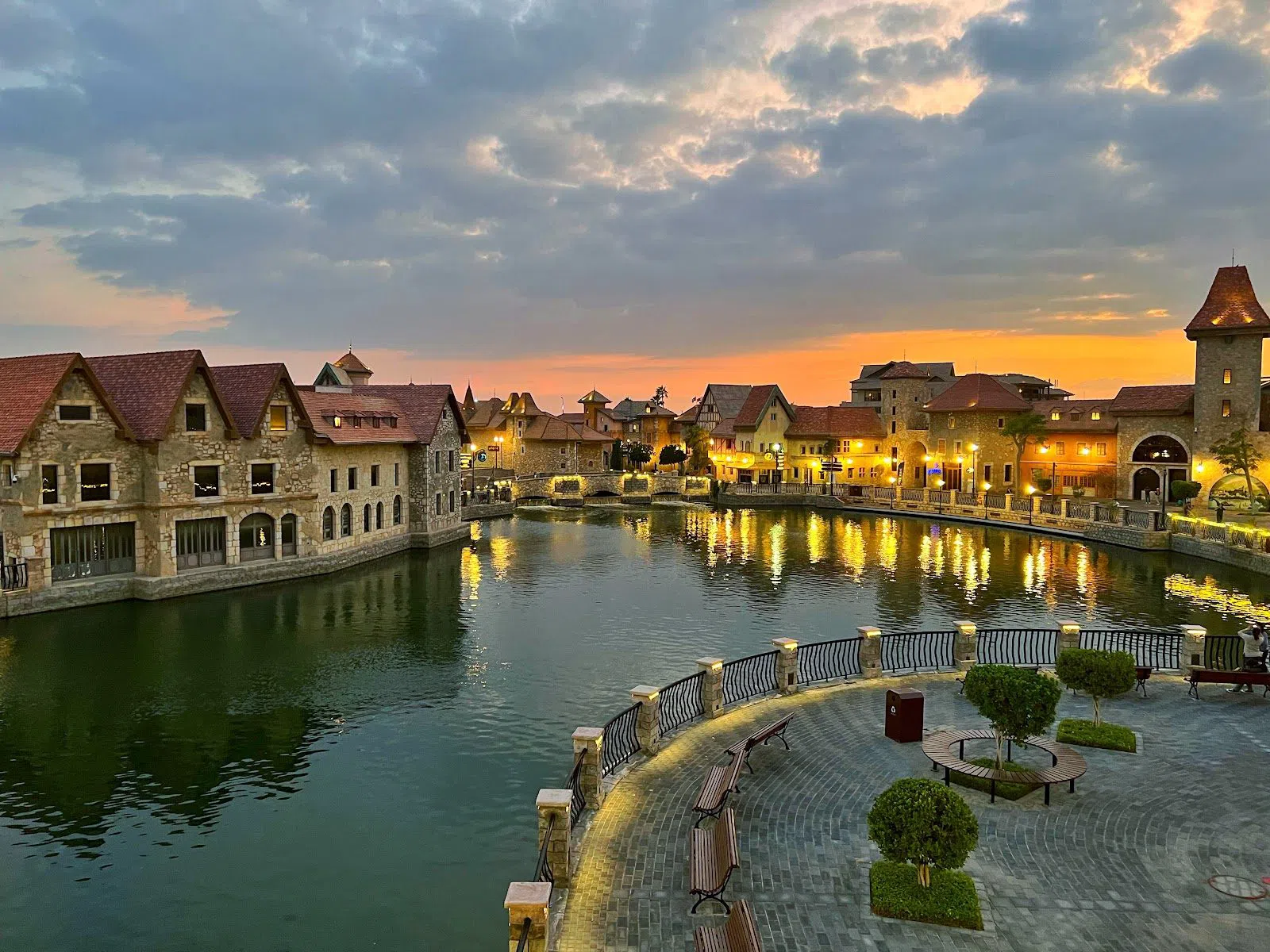
Eat there rather than inside. Festival food anywhere is a queue and a compromise, and here you have a full dining zone a few minutes' walk away with no admission charge. Go early, eat something with substance in it, then go in. The strip is themed around old European trading-town frontages, which is exactly as authentic as it sounds. The kitchens are real, though, and the prices are ordinary city prices rather than captive-audience ones.
Where the night carries on
Soho Garden DXB (Meydan) is the closest thing the city has to a festival afterparty under one roof: four distinct rooms on one site (Garden, CODE, Playroom and Black), with CODE the biggest indoor house and techno room in Dubai. It opens Thursday to Sunday, 10pm to 4am. Entry runs from free to around AED 200 depending on the night and the guestlist; tables start around AED 2,000. Groups are its business, so it is an easy sell for eight people who cannot agree on one sound. Meydan itself only became a nightlife address after the racecourse opened there in 2010 and the rest of the district filled in around it.
Ushuaïa Dubai Harbour Experience (Dubai Harbour) is running its third Dubai season and programmes big headliners in the same November window. That is a warning as much as a recommendation: check its calendar against the festival dates before you book flights, because a clash means choosing between two things you have already paid for. Entry runs roughly AED 150 to 350, with cabanas and tables sized for six to twelve at considerably more.

Bla Bla by McGettigan's (The Beach, JBR) is the easiest place in the city to fall in with other people, which makes it the obvious answer for anyone travelling alone. It is a beach club, a long run of bars, karaoke rooms and a nightclub inside one compound, so a mixed group splits and rejoins without any of the usual negotiation. Sunbed minimum spend is roughly AED 150 to 300 and drinks run AED 45 to 80. It changed hands in March 2026 and now trades under the McGettigan's name; the format is unchanged.
The days you spend horizontal
Four consecutive nights is more than most people think it is. Build in at least one day where the plan is shade and water.
COVEBEACH (La Vie, JBR) relocated from Bluewaters and now runs to 64,000 square feet over four levels. Daybeds and cabanas take groups of four to ten on a minimum spend of roughly AED 200 to 400 per person, and weekends need booking ahead. It is the right kind of slow, big enough that you are not pinned to one lounger for eight hours.
SAN Beach (Palm West Beach) leans quieter and more wellness-minded than the party clubs, open Monday to Thursday from 9am to midnight and later at weekends, with minimum spends of roughly AED 150 to 300 per person. It is the one to pick on the day you need to be lying down but not indoors. The whole strip it sits on is reclaimed land, finished in the mid-2000s, which is why the beach is arrow-straight and the sand is uniformly pale.
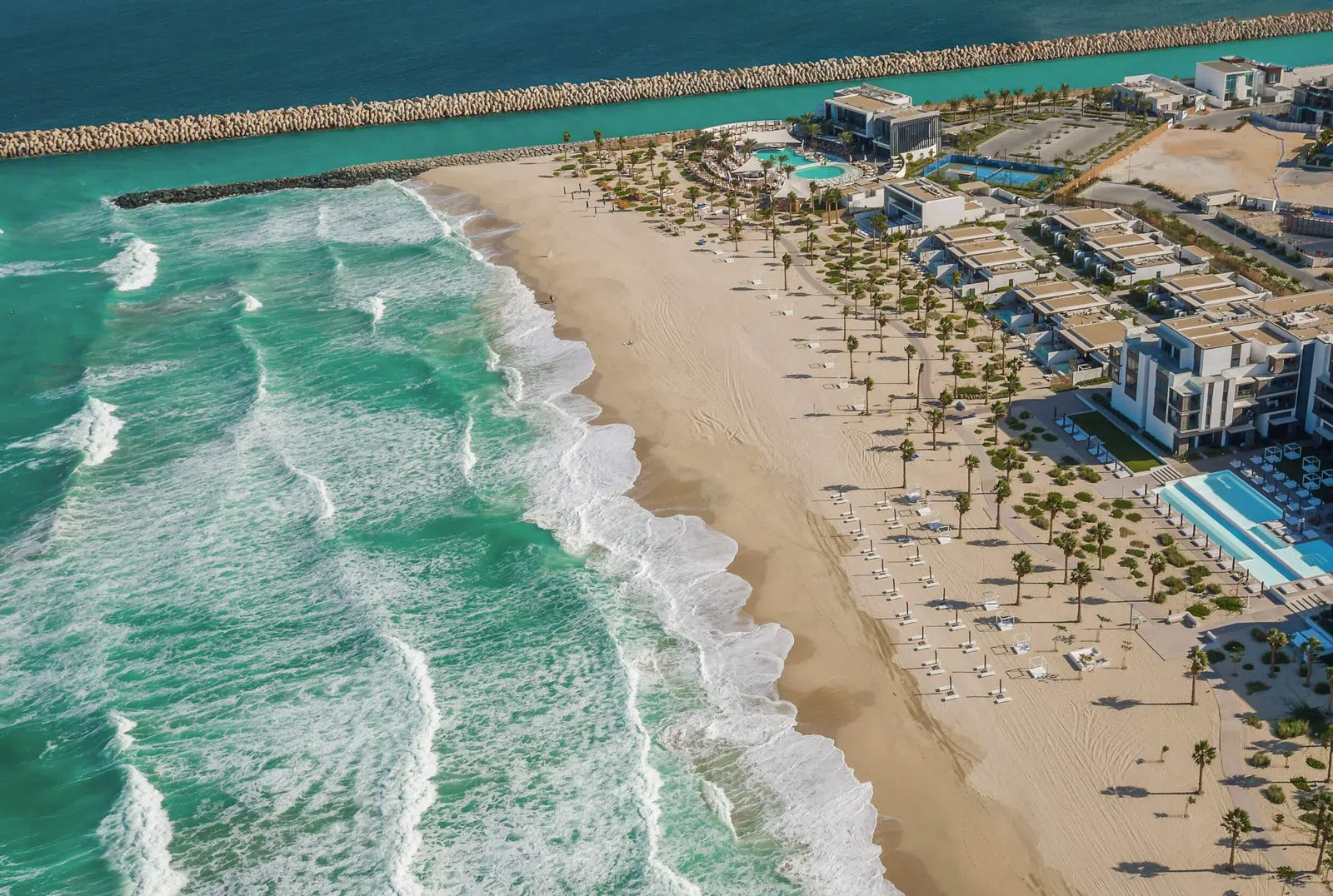
Nikki Beach Resort & Spa Dubai (Pearl Jumeirah) is the grown-up version of the same day, with daybed minimum spends from roughly AED 400 per person and a hotel attached if a group decides not to move at all. Saturday sessions fill, so reserve. It suits couples and older groups better than the JBR strip does.
Iris Harbour (Dubai Harbour) reopened on 1 April 2026 after leaving Meydan, and it is the civilised counterweight to four nights of main-stage volume: a rooftop, a sunset, roughly AED 250 and up per person. Terrace tables take six to ten with a reservation. The door is smart-casual and gets sharper at weekends; shorts and festival wristbands will not help you. Go on the night you want to hear yourself speak.
One day away from the coast

Platinum Heritage (desert, pickups citywide) is the single non-nightlife booking worth making before you fly. It runs conservation-reserve access in vintage Land Rovers rather than the dune-bashing coach circuit, at roughly AED 500 to 900 per person, with shared vehicles or a private Land Rover for groups of six or more. It books out in the November high season, which is the busiest month of the Dubai year.
The reserve it works in was established in 2003 as the country's first protected area of its kind, covering a substantial slice of the desert inland from the city. The difference is audible: no convoy of 4x4s throwing sand at each other, no engine noise for most of the drive. If you have four nights of subwoofers ahead of you, a morning of silence is maintenance rather than indulgence.
Doors, groups and arriving on your own
Dubai's door policy is not mysterious, but it is real. Beach clubs and rooftops run smart-casual and enforce it more strictly on Friday and Saturday nights; the big club complexes care more about the ratio in your group than about your shoes. Guestlists are genuine at Soho Garden DXB and worth joining in advance rather than arguing at the rope. Hotel guests get an easier door at FIVE LUXE JBR than walk-ins do.
If you are coming alone, the festival itself is the easy part: passes are per head, the site is huge, and nobody is counting. The harder part is the rest of the week. Bla Bla by McGettigan's and Riverland Dubai are the two places where being on your own is unremarkable. Minimum-spend beach clubs are the opposite, priced per person against a daybed built for a group, so a solo day at COVEBEACH costs the same as a shared one and feels emptier.
Couples should skip the four-room complexes and spend the evening at Iris Harbour or Nikki Beach Resort & Spa Dubai instead. Groups of eight or more should be booking tables and daybeds in advance rather than arriving hopefully, because November is the month the whole city is full.
The practical bit
Buy a nol card at the airport, use the Red Line for daytime movement, and accept that every festival night ends in a taxi unless you are sleeping at Dubai Parks and Resorts or Dubai Investments Park. Ride-hailing apps work fine and surge like everywhere else at 3am.
The dirham is pegged to the US dollar, cards work almost everywhere, and the only reliable cash needs are small taxis and the odd tip. Alcohol is served in licensed venues only, meaning hotels, clubs and beach clubs, and drinking in public spaces is not permitted.
November is high season for good reason: daytime highs in the high twenties to low thirties Celsius, cool enough after dark to stand in a field for six hours. Book flights and beds before the festival lineup is announced, not after, because that announcement moves prices.
A workable four-night budget: GA pass around AED 590, four nights at Premier Inn Dubai Investments Park at roughly AED 250 to 400, AED 60 to 150 a head for a proper dinner at Riverland Dubai, AED 150 to 300 for a beach day, AED 500 to 900 for the desert, and AED 150 to 400 for taxis across the week. Push to VIP, a suite at FIVE LUXE JBR and a table at Soho Garden DXB and you can multiply that by four without trying. Both versions of the trip are legitimate, so decide which one you are booking before you start. For the rest of the city, the Dubai guide covers what happens the other eleven months of the year.
Before you go
Where is UNTOLD Dubai 2026 held, and has the venue changed?
It has moved from Expo City and now runs 5 to 8 November 2026 at Dubai Parks and Resorts. That is out on the Jebel Ali side of the city, so book beds there rather than Downtown. The difference is around AED 100 per taxi, each way, four nights running.
Can I get to the festival on the Dubai Metro?
Only part of the way. The site has no metro station of its own, so you take the Red Line to Ibn Battuta and then the DPR1 shuttle from the bus station there. The metro shuts long before a festival night ends, so plan the return leg as a taxi: roughly AED 60 to Dubai Marina, AED 100 to Downtown, AED 120 to the airport.
How much do UNTOLD Dubai passes cost, and do I have to buy in a group?
Four-day general admission starts around AED 350 on early bird and lands near AED 590 at standard price; four-day VIP starts around AED 900. Passes sell individually with no minimum, so friends arriving from different countries can each buy their own.
Is it worth going alone?
The festival part is easy on your own, since passes are per head and the site is large. The rest of the week takes more thought: Bla Bla by McGettigan's at The Beach JBR and the Riverland Dubai dining strip are the two places where turning up alone is unremarkable. Minimum-spend beach clubs are the worst value on your own, because the daybed is priced for a group.
What should I budget for four nights?
A lean version runs roughly AED 590 for the pass, AED 250 to 400 a night at Premier Inn Dubai Investments Park, AED 60 to 150 per proper dinner, AED 150 to 300 for a beach day and AED 150 to 400 in taxis across the week. Add VIP, a suite at FIVE LUXE JBR and a club table and that multiplies several times over.